.jpg)




بررسی ظرفیتهای پاکستان برای تنوعبخشی به مبادی ورودی کالا به کشور
 برای دانلود فایل با کیفیت اصلی کلیک کنید
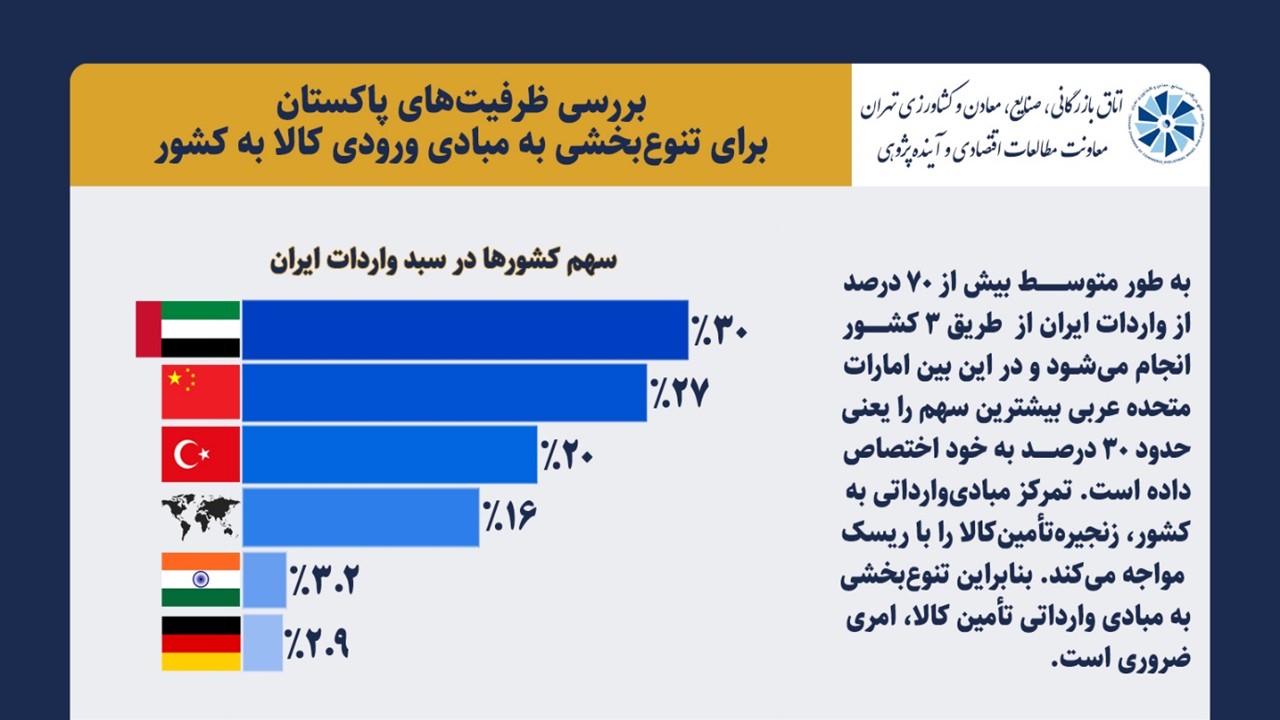
تنوعبخشی به مبادی وارداتی، امری ضروری برای امنیت اقتصادی و تابآوری زنجیره تأمین کشور است. تجارت خارجی ایران که در حال حاضر با تمرکز بیش از 73 درصدی واردات بر سه کشور امارات متحده عربی، چین و ترکیه روبهرو است، در برابر شوکهای بینالمللی و تغییرات ژئوپلیتیک آسیبپذیر است. در این شرایط این پرسش مطرح میشود که چگونه میتوان برای ثبات زنجیره تأمین کالا، مبادی وارداتی کشور را متنوع کرد؟
این گزارش با بررسی شاخصهای تجارت خارجی نشان میدهد پاکستان با شاخص اکمال تجاری 26.7 که به امارات با رقم 29 نزدیک است و نیز بهرهمندی از مرزهای خاکی و دسترسی به آبهای آزاد، میتواند ظرفیتی برای جایگزینی و تنوعبخشی به مبادی ورودی کالا به کشور داشته باشد. با این حال، سهم کمتر از 2 درصدی پاکستان در واردات کشورمان نشان میدهد که عبور از آسیبپذیریهای فعلی، نیازمند تغییر الگوی تجاری سنتی بین دو کشور و رفع چالشهای لجستیکی ناشی از توقف و بارگیری مجدد در مرزها است.
Diversifying import sources is an essential imperative for the economic security and supply chain resilience of the country. Iran’s foreign trade, currently characterized by a concentration of over 73% of imports from just three countries which are the United Arab Emirates, China, and Turkey is vulnerable to international shocks and geopolitical shifts. Under such circumstances, the question arises: how can the country’s import origins be diversified to ensure the stability of the commodity supply chain?
By analyzing foreign trade indicators, this report demonstrates that Pakistan with a Trade Complementarity Index of 26.7, closely trailing the UAE’s figure of 29, alongside its shared land borders and access to open seas possesses significant potential to serve as an alternative and diversify the nation’s import gateways. Nevertheless, Pakistan’s share of less than 2% in our country’s imports indicates that overcoming the current vulnerabilities necessitates a paradigm shift in the traditional bilateral trade patterns, as well as resolving the logistical challenges stemming from border halts and transshipment.
نظرات کاربران